How To Build An Emergency Fund
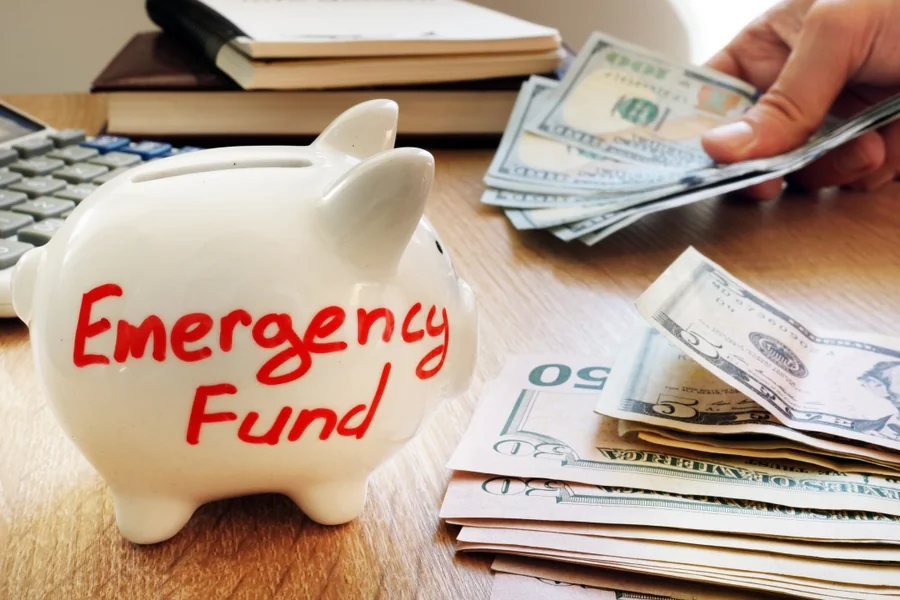
An emergency fund consists of savings that have been saved up to use for emergencies such as unexpected expenses or if you lose your job for a while without having to take out a loan, use a credit card, or invest in something. It can assist you with things like medical bills, settled on home fixes, vehicle issues, or job misfortune. The typical target is to save three to six months of living expenses, but this depends on your income, the stability of your job, monthly expenses and your personal needs. Don’t save a huge amount of money all in one lump sum. Even small amounts make a difference and can accumulate to create a healthy financial buffer in the long run.
Unforeseen costs are a reality of life. A car could require an emergency repair service. You might get a medical bill on a day when you don’t expect it. Your income may also shift due to a loss of employment, decreased hours or an unforeseen family need.
These circumstances can easily escalate into debts if you don’t have enough savings. Having an emergency fund will provide you with another choice. Rather than taking out a loan or selling investments when the market is wrong, they can use the money that they put away in an emergency fund.
The positive part is that you don’t have to earn a lot of money to begin saving in your emergency fund. The important thing is to have a realistic savings goal, make saving part of your new “normal” and ramp up the amount you save as you earn more.
Why Is An Emergency Fund Important?
Emergency funds are financial safety nets in times of unexpected circumstances. It is not intended to cover routine outgoings or routine purchases. This is designed to provide you with a safety net when your traditional budget simply isn’t sufficient.
Let’s take an easy one. If your monthly bills are $2000, then… You might find yourself in a situation where your car needs repairs of $1,200, and you are short of cash, in which case you may need to use a credit card or obtain a loan. Emergency fund should be used to make up the gap, if you have one.
An emergency fund can also help alleviate financial stress. When a crisis arrives, if you are aware that you have funds available to use to make wise decisions, it is easier.
Some of the main benefits include:
- Fewer debt cards needed: You might not need to use a high interest debt card to cover emergency expenses.
- Income protection: If your income stops for a short period, savings are needed to pay your basic bills.
- Smooth and more stable financial life: Unforeseen expenses are easier to handle if there is more financial stability.
- More time to make good decisions: You get more time to make the right financial decision.
- Protection of the long-term goals: An emergency fund can stop you from taking money out of your savings for retirement, education or other goals.
The key is an emergency fund is not a matter of being rich. It’s all about financial security.
How Much Should You Save In An Emergency Fund?
The most frequently asked question is “What is the correct amount to have in your emergency fund”? The correct amount varies from person to person.
The rule of thumb for saving is 3 to 6 months of necessary living expenses. The keyword “essential” is an important one. When working out your basic emergency needs, you don’t normally need to take into account that the money you are saving will be used for something else like entertainment, restaurants, or nonessential purchases.
Start by adding up expenses such as:
- Rent and mortgage repayments
- Utilities
- Groceries
- Transportation
- Insurance
- Minimum debt payments
- Essential medical costs
- Basic household expenses
If you have a monthly essential expense of $1,800, then you would need $5,400 in your emergency fund, to cover expenses for three months. A six-month fund would be $10,800.
But, depending on the situation, your dream emergency fund could be smaller or larger.
If your income is irregular, your job is in a field that often has to let you go, you’re supporting a family, or you have large fixed costs, you may want a bigger fund. A person who has a steady job, low monthly expenses and a good income security might be able to begin with a lower savings goal.
Don’t be put off by the target period if saving a number of months doesn’t seem achievable. Set a smaller goal, like $500 or $1,000. After you accumulate that number, add up towards 1 month of living expenses and then add up towards 3-6 months.
The best emergency fund is the one that you can create and keep.
How To Build An Emergency Fund Step By Step
Saving to build an emergency fund is simpler if it’s a simple process. Do not necessarily have to make a lot of changes or save hundreds a week.
1. Set a Specific Savings Goal
First: Select a clear goal. It’s hard to measure a vague goal like “I need to save more money.
Rather, select a certain quantity and deadline. For instance, you may choose to save $1,000 for the next 6 months.
It can be easier to determine monthly savings if you have a specific target in mind.
2. Review Your Monthly Budget
Look at your income and regular expenses. Determine the amount of money left after bills and other necessary expenses.
There may be some short-term budget cuts you can make. It does not involve eliminating all of what you like. Saving can be done by making small changes.
For instance, if you save an extra $25 to $50 on some regular bills, then you can apply a monthly contribution to your emergency fund.
3. Start With What You Can Afford
If you will save enough money, don’t wait to look for an opportunity.
If you can save $20 per week, then begin saving $20 per week. Saving $10 is still progress if you can only save that much. The idea is to establish a routine.
Little drops of water make big waves. Most importantly, a foundation is provided that you can build upon in the future when your income rises.
4. Automate Your Savings
To build up an emergency fund, one of the easiest ways to do so is to automate your contributions.
Automatically transfer your paycheck into a savings account after you get paid. This lessens the risk of spending the money prior to saving it.
It can be set at a set dollar amount, such as $50 with each paycheck, or as a percentage of your income.
The usefulness of automation is that you can make saving an automatic process instead of making it a choice every month.
5. Keep Your Emergency Fund Separate
To consider emergency savings in an account that is separate from your regular savings.
Having your emergency fund in your “bills, entertainment and food” account may make it more tempting to accidentally spend it.
For most, an emergency fund should be:
- Easily accessible at times of true crisis.
- Different from regular expenditures
- Stored in a fairly secure location
- Without unnecessary penalties or restrictions provided.
A savings account may be a good option since the funds are readily available and you will receive some interest.
6. Look for Extra Sources of Savings
You don’t need to count on just your normal salary.
If you can save some of the unexpected or unexpected money into your emergency savings. This can be a tax refund, a work bonus, cash in a gift or funds from selling off unused items.
One more way to raise temporary savings is to get a boost in income. If you’re getting a bonus, you may want to allocate part of it to your emergency fund and then allocate the balance to a different financial priority.
The key is to not solely rely on one-off earnings. The same savings routine should continue to be used as the foundation.
Common Emergency Fund Mistakes To Avoid
While saving money is crucial, so too is the way you manage it. There are some common pitfalls that can render an emergency fund less effective.
One potential challenge is to save too much too quickly. While it’s crucial to have an emergency fund, there are other financial priorities to take into account. You might have to make a compromise if your debts have high interest rates, such as helping yourself to emergency savings and paying off debt.
One of the other errors is failing to allocate a fund for anything other than an emergency. A vacation, new phone or planned purchase are not the place to draw from your emergency savings. If possible, make individual savings accounts for each expense.
It’s also best to not put the money into assets that will decrease in value or be hard to liquidate at a moment’s notice. Emergency savings are not about getting the biggest return, rather stability and access.
Last but not least, don’t use the first milestone savings to mark the end of the savings journey. Having a $1,000 emergency fund is a good place to start, however, your financial situation may necessitate a bigger emergency fund at some point.
The fund can be considered as:
Emergency fund = protection, not spending money.
Use it for a true emergency, and you will be using it for a true emergency. After the issue is taken care of, establish restoring the fund as your next financial priority.
How To Stay Consistent With Emergency Savings
It takes a lot of discipline to stick with an emergency fund.
You might be very motivated to save initially. But, after a few months, progress seems slow. This is normal. Creating a financial security is typically a long-term endeavor.
Do not attempt to get to the end number, but concentrate on the habit.
It can be made easier by checking on your savings once a month. Review what you’ve saved, what you have contributed and if your goal still fits the bill.
Another way to ramp up your contribution is to make it whenever your financial situation changes. For instance, if your pay is going up, put some of the extra money you have into savings instead of spending it on your regular bills.
Another good tip is to have your goal in sight. It is easier to feel like you are saving when you see the progress. As people watch their emergency fund increase from $100 to $500 then to $1,000, it can help inspire them to keep going.
Keep in mind that financial misfortunes are not sign of failure. In case of an emergency, the fund has served its purpose if you have to use your savings. It can be rebuilt later.
The purpose is not to make a perfect financial system. The goal is to make one that can be used in real life.
Final Thoughts
An emergency fund is one of the most useful things you can do to help you become more financially secure. It’s not essential to save thousands of dollars right away. Begin with a budget that you can afford and add more as you can.
The first step is to figure out your necessary monthly costs. Make a sensible starting goal, automate savings and ensure that the money is not saved in your general spending account. If your income increases or you have a change in your spending, reconsider your target and make the necessary adjustment to your savings.
Have a solid emergency fund to pay for unplanned expenditures without resorting to borrowing. What’s more, it provides you with some extra breathing room when things don’t go your way.
Take small steps, work steadily and strive for improvement. Those regular payments can be a financial safety net that not only helps your budget but can help your long-term financial goals as well over time.