Simple Budgeting Tips For Beginners
Budgeting is the act of determining your spending, saving and investing priorities for your income. One of the easiest ways to create a budget is to start by listing the money that comes in, the money that goes out, and what is considered a need versus a want for each item of expenditure. Once you have a budget in place, that doesn’t mean that you can’t have fun spending any money. Instead, it can guide you towards understanding where your money is going and to making better decisions prior to spending it. Budgeting can be useful in making day-to-day finances easier if you have a plan and follow up on it regularly.
It can be challenging to maintain control of finances when you are just starting off. Bills come in, expenses get tall and then something comes along that you didn’t expect. If you don’t have a basic system in place, it is easy to go over budget.
The advantage of budgeting is that it doesn’t need to be complicated. You don’t need to be an expert with financial knowledge or a detailed spreadsheet made up of dozens of categories. It’s easy to create a budget and it can help you make progress.
If you’re looking to eliminate debt, save more money, save, save, save, or just get your finances in order, these budgeting tips for beginners will help you start.
Start By Understanding Your Income And Expenses
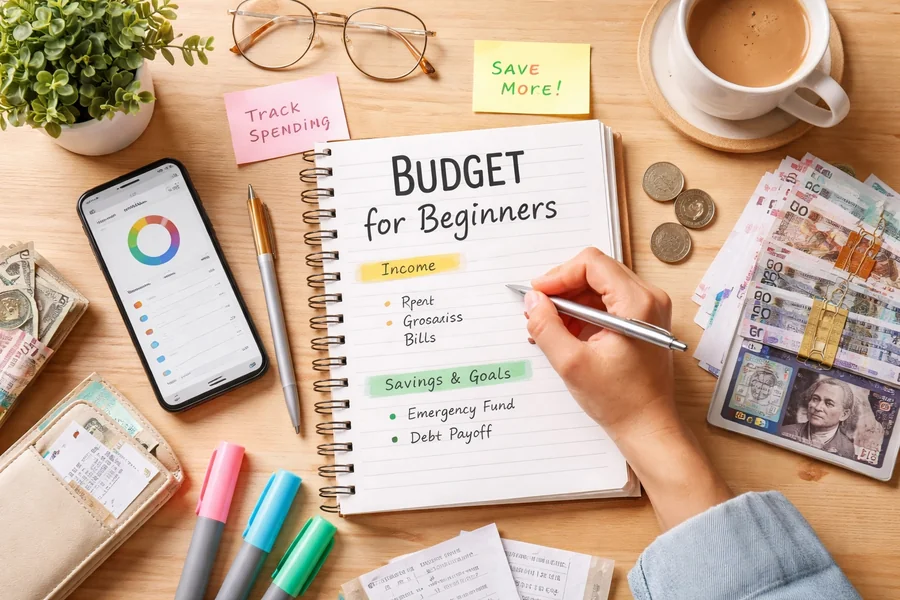
The first step to budgeting is knowing where cash is flowing and where it is going.
Use your gross monthly income as the basis. This might be easy if you get paid a fixed income. If you have multiple sources of income for freelance work, commissions, a small business, or multiple sources, use a realistic average from recent months.
Then make a list of your recurring costs. These may include:
- Rent / mortgage payments
- Utilities
- Groceries
- Transportation
- Phone and internet bills
- Insurance
- Loan payments
- Subscriptions
- Cost of childcare/education.
Next, consider variable costs. These are expenses which can vary from one month to the next. This includes meals out, entertainment, items of clothing, shopping and personal activities.
Take a month to record all of your spending. Use a budgeting app, spreadsheet, notebook or bank statements. Consistency is more important than the method!
This may uncover some spending behaviors that you wouldn’t have suspected. You might make a few small purchases over the course of the week, but add up to a lot over a month.
Separate Needs From Wants
The first tip for budgeting that is important to remember is to distinguish between needs and wants.
Needs are costs that are needed for an individual to live and have necessary duties. Examples include housing, food, essential transportation, utilities, and essential medical costs.
Desires are things that make your life better, but do not have to be present. This can include restaurant meals, entertainment, new gadgets, top dollar subscriptions, and impulse items.
It’s not about getting rid of all of your wants. It can be hard to stick to a budget when you don’t have anything to look forward to. Instead, determine what you can afford to spend on non-essential items if you’ve taken care of your priorities.
If you have any doubt about a purchase consider:
Is it necessary or does the person just want it?
That question is a very small gap between wanting and buying. Sometimes that break may be just enough to avoid an unnecessary purchase.
You can also set up a brief waiting time for bigger investments. If you wait 24 hours or a few days you’ll know whether or not it’s worth paying for.
Create A Simple Monthly Budget
After you have some idea of your income and expenditures, develop a simple budget for the month.
To create a simple budget, you can split your money into three main categories:
- Essential expenses – housing, food, utilities, transportation, required payments.
- Financial objectives – savings, investments and additional debt repayments.
- Flexible spending – entertainment, dining out, hobbies, shopping, other discretionary spending.
You’ve likely heard all kinds of budgeting tips, like the 50/30/20 rule, which recommends that you save or pay down debt 20% of your income, spend 30% on wants, and spend 50% on needs.
This can be a good jumping off point but it is not a hard and fast rule. Everyone’s financial situation is different. An individual residing in a high-cost city might be spending over 50% of his or her income on essential expenditures. An individual who is concerned with debt repayment may opt to cut down on spending and save more.
The best budget is one that you can stick to.
Assign a goal to each major source of income. If you’re making $2,500 a month, then you need to have some sort of plan for how you’re going to spend that money before the month is over.
Your budget doesn’t have to be exact and anticipate all of your spending. It just has to give them guidance.
Set Realistic Savings Goals
It’s more convenient to save money if you have a purpose for saving that money.
Rather than “I need to save more” make a clear goal: For instance, you may want to save for a new laptop, for education, for a vacation, or for a future purchase, or you could be building an emergency fund.
Begin with one that is manageable. If $500 a month is not in the budget, then don’t feel like you have to save it. It’s okay to save $50 or $100 regularly, as it establishes a good savings habit.
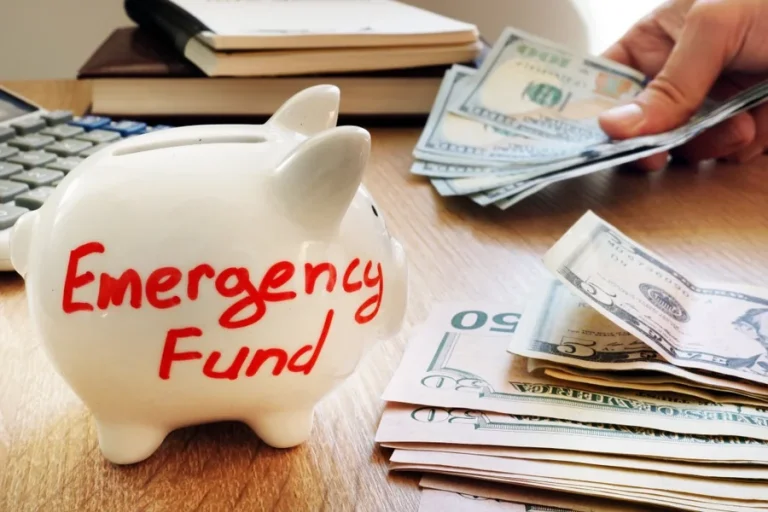
One of your top priorities should be an emergency fund. It can help with costs that may arise, like car repairs, medical bills, an emergency trip or a temporary loss of income.
Consider treating savings like a regular bill. Save the earnings as soon as they are received, not toward the end of the month. When you have nothing else to pay for, you’ve got little left to save.
This can be easier if you use automatic transfers. If it’s possible, transfer some money from your checking account to your savings account after you get paid.
If it is done consistently, even a small amount will add up to signify over time.
Control Everyday Spending And Avoid Impulse Purchases
The little things you spend can make a big difference in your monthly budget.
This doesn’t mean keeping a close eye on all purchases rather than with anxiety. Rather than patterns, think of pathways. If you order coffee on a regular basis, food, online purchases or anything else, consider the monthly expense.
For instance, if you spend $8 a couple of times a week, you can end up spending hundreds of dollars per year. With the total amount known you can then make a decision about whether the expense is deemed to be justified.
Use a couple of quick and easy tricks:
- Make a shopping list before going to the store.
- Shop around when purchasing high dollar items.
- Get rid of unused magazines or other publications.
- Prepare meals at home as much as possible.
- Stick to a weekly spending cap for things you don’t need to buy.
- Don’t do shopping when bored or stressed.
- Wait before making non-essential purchases.
- Check any recurring payments periodically.
Another effective strategy is to assign a certain amount of “fun money” to yourself. This way, you can have the income without constantly having to doubt whether every little thing you buy is permitted.
A realistic budget should be able to support you, not make you feel guilty for spending money.
Make Debt Repayment Part Of Your Budget
One of the problems is that when you have debt, you have to budget for the amount you owe – which means you have less money to play with.
Make a list of your debts, including the debt balance, interest rate, and the minimum payment due each month. This will help you understand your debt.
Pay the minimum amounts due on time. If you have extra money, then you should try to pay off a specific debt.
There are two popular debt repayment strategies: the debt snowball and debt avalanche.
The debt snowball strategy is to make minimum payments on other debts and extra payments on your smallest debt. Smaller balances can be a source of satisfaction to pay off.
With the debt avalanche method, you focus on the debt with the highest interest rate first. This can lower the interest that you accumulate in the long run.
Both methods are not necessarily correct for all. The key is to select a method that you grasp and can follow.
Do not add any new but extra unnecessary debt during the process of paying down their debt. One of the benefits of a budget is that it will show you where you can make some cuts so that you can put that cash back towards paying your debt.
Review Your Budget And Adjust It Regularly
Budget is not a one-time thing.
Your income, your expenses, your priorities, your lifestyle can all change. Your old budget may no longer be feasible due to a utility bill, new job, moving, changes in family or an emergency.
Take some time weekly to catch up on expenses. Then review again in detail at the end of each month.
Ask yourself:
- Do I have any totals that exceeded my budget in any category?
- What was more costly than you anticipated?
- Have I saved enough yet?
- Progressed with debt?
- Can I cut back on any expenses?
- Are my priorities still in line with my budget?
Don’t think that all the budget is a failure if you exceed it in one part. Review and make changes to your plan.
For instance, if food prices are higher than anticipated, you may cut back on entertainment a bit for the remainder of the month. The aim is to make sensible adjustments, not give up on the budget.
Some space should also be left for any unforeseen costs. It’s hard to stick to a budget when it’s not flexible.
Above all, don’t look for perfection. Budgeting is a learned art. The first budget you create might not be exactly as you envisioned, and that’s okay!
Final Thoughts
One of the easiest ways to feel more comfortable with money is to become a master of budgeting. There is no need for a complicated system. The first step is to have a clear perspective of your income, any regular expenses, savings goals and spending habits.
Start small. Monitor spending over the course of a month, differentiate between needs and wants, establish realistic spending limits, and save money. If you have debt, put repayment into your plan and select the right strategy for you.
Keep in mind a budget is not an instrument to prevent you from spending your cash. It provides you with greater control over its usage. If you understand where your funds are going, you can make better choices as well as choices that will support you both currently and in the future.
The easiest budgeting system will be one that everyone can use every month. Begin at a basic level, go over what you have learned and adjust as conditions change. As time goes on, these little habits can make handling your finances much easier.