Accounting Illustration: A Complete Guide for Finance, Business, and Design Projects
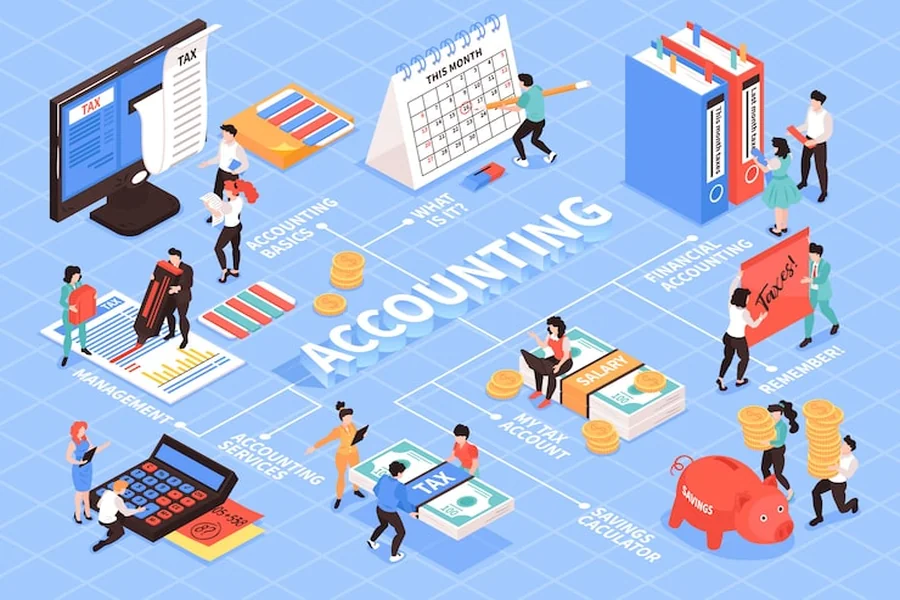
An accounting illustration is a visual design that represents accounting, finance, bookkeeping, tax, budgeting, reporting or business concepts. It may contain calculators, charts, financial documents, coins, people working with numbers, graphs, and invoices. A well-crafted accounting illustration can help to transform technical financial ideas into visuals which are more understandable.
An accounting illustration can be used on websites, presentations, social media, reports, landing pages, training materials, and anything else a business, accountant, finance blogger, educator, agency, or software company uses. Simple, modern, flat, hand-drawn, 3D or realistic, the style varies according to the project.
Featured Answer: What Is an Accounting Illustration?
An accounting illustration is a visual representation or image to clarify accounting or financial topics. It can display bookkeeping, tax filing, budgeting, invoices, financial reports, calculators, spreadsheets, money, or business analysis. These illustrations are frequently featured on websites, presentations, apps, reports, and educational materials.
Accounting Illustration Quick Facts
| Feature | Details | Example |
| Visual Type | Finance-related graphic | Bookkeeping scene |
| Main Purpose | Explain accounting topics | Tax or budget content |
| Common Elements | Charts, calculators, invoices | Financial dashboard |
| Popular Styles | Flat, vector, 3D, hand-drawn | Modern business artwork |
| Main Users | Accountants, agencies, bloggers | Finance websites |
| Common Formats | SVG, PNG, JPG, AI, EPS | Website graphics |
| Typical Use | Web, reports, slides, social media | Blog header |
| Main Keyword | accounting illustration | Finance visual |
Why Accounting Illustration Is Popular
It’s hard to convey text-based information for financial topics. An illustration in accounting helps to get an understanding of a page, a report or a presentation before reading all the details in it.
An accounting illustration is also helpful as accounting is composed of a lot of visual concepts. Numbers and graphs can be shown as visual representations, as can ledgers, taxes, invoices and expenses, profit, cash flow, and financial planning.
An accounting illustration is a common choice for designers who desire a professional-looking finance photo, but don’t wish to have to use a stock photo. Illustration provides greater control of colors, layout, characters, icons, and branding.
For many people, the following are common reasons for using finance illustrations are:
- Explaining bookkeeping services
- Supporting tax-related content
- Making finance software web pages.Creating finance software web pages.
- Creating business presentations
- Bringing accounting blogs to life with images.
- Enriching reports with graphics
- Building educational materials
- Enhancing social media posts
Even a technical topic can be made more approachable with a strong accounting illustration, but without altering the meaning of the text.
Types of Accounting Illustration
The right style depends on where the image will appear. People searching for an accounting illustration usually choose from several common visual types.
Flat Vector Illustration
A flat accounting illustration features simple shapes, clean lines, minimal shading, and easily readable visual elements.
It may include:
- A calculator
- A spreadsheet
- Coins
- Charts
- Tax forms
- A finance professional
- Laptop screens
- Business icons
If the need is to have a flat accounting illustration, it works well for websites, SaaS pages, blogs and presentations, since it’s clean and can be scaled easily.
3D Accounting Graphics
A 3D accounting illustration is more three dimensional and can feature more realistic objects, soft shadows, and dimensional icons.
Commonly used in:
- App landing pages
- Fintech websites
- Modern presentations
- Social media graphics
- Marketing campaigns
A 3D accounting illustration can help add a visual component to a finance page, but should still fit in with the overall brand style.
Hand-Drawn Accounting Artwork
Hand-drawn accounting illustration can be more relaxed and instructional.
May be beneficial for:
- Classroom content
- Explainer articles
- Small business websites
- Creative presentations
- Finance newsletters
Typically these types of accounting illustrations include sketch style lines, simple characters, arrows, notes and visual symbols.
Isometric Accounting Illustration
Isometric accounting illustration is a type of three-dimensional drawing that gives a general idea of objects in space with angles.An isometric accounting illustration is a structured 3D drawing with angled objects to provide a general idea of objects in space.
Typical scenes feature tax professionals operating at desks, groups analyzing charts, tax forms, bank statements, or business reports.
An isometric accounting illustration is an excellent choice for pages related to technology, accounting software, and fintech.
Minimal Accounting Illustration
A minimal accounting illustration emphasizes just the essential visuals.
For instance, a single calculator, a document, a pie chart, or a single person who reviews the accounts can communicate the topic.
When there is already a lot of text on a page, and the image should not be in competition with other content, using a minimal accounting illustration is helpful.
Accounting Illustration vs Accounting Stock Photo
There is a clear difference between an accounting illustration and a traditional accounting stock photo.
| Feature | Accounting Illustration | Accounting Stock Photo |
| Visual Style | Drawn or digitally created | Camera-based image |
| Customization | Often highly flexible | Usually limited |
| Brand Matching | Easy to adjust | Depends on the photo |
| Concept Use | Good for abstract topics | Good for real-world scenes |
| File Options | SVG, PNG, EPS, AI | JPG, PNG |
| Scalability | Vector formats scale well | Depends on resolution |
An accounting illustration may be better for a branded website, while a stock photo may work better when a real person or office environment is needed.
Where Accounting Illustration Is Commonly Used
An accounting illustration can appear in many types of digital and print content.
Accounting Websites
Accounting firms may use an accounting illustration on service pages for bookkeeping, payroll, tax preparation, audits, or financial reporting.
The image can help separate service sections and make long pages easier to scan.
Finance Blogs
A finance blog may use an accounting illustration as a featured image for topics such as budgeting, tax deadlines, small business accounting, or cash flow management.
Using a consistent illustration style can also make the blog look more organized.
Business Presentations
An accounting illustration can support slides about revenue, expenses, forecasting, tax planning, profit, or financial performance.
The visual should support the message instead of adding unnecessary detail.
Accounting Software Pages
Software companies often use an accounting illustration to explain dashboards, automation, invoicing, expense tracking, and reporting features.
Illustrations can help users understand a feature before they see the actual interface.
Educational Content
Teachers and course creators may use an accounting illustration to make finance lessons easier to follow.
Visual examples can support lessons about assets, liabilities, balance sheets, income statements, and basic bookkeeping.

How to Choose the Right Accounting Illustration
Not every visual will work for every project. Before selecting an accounting illustration, consider the purpose of the page and the audience.
Match the Topic
Choose an accounting illustration that clearly relates to the subject.
For example:
- Tax article: tax forms, calculator, receipts
- Budget article: expense chart, wallet, coins
- Bookkeeping page: ledger, invoice, spreadsheet
- Audit page: documents, checklist, magnifying glass
- Payroll page: employee files, salary document
The closer the visual is to the topic, the easier it is for users to understand the page.
Match the Brand Style
An accounting illustration should fit the website’s existing colors, fonts, and layout.
A highly playful image may not fit a formal accounting firm. A very corporate image may feel out of place on a casual finance blog.
Check the File Format
Before using an accounting illustration, check whether the file format fits your needs.
SVG is useful for scalable web graphics. PNG works well when transparency is needed. JPG may be enough for blog images. AI or EPS files are useful when a designer needs to edit the original vector artwork.
Check the License
Always review the license before publishing an accounting illustration.
Some images are free for personal use but require a paid license for commercial use. Others may require attribution.
Check the Resolution
If you use a raster accounting illustration, make sure the resolution is large enough for the final placement.
A small image may look blurry when stretched across a large website banner or presentation slide.
Accounting Illustration for Small Business Content
Small business content often covers practical topics such as expenses, bookkeeping, taxes, invoices, pricing, and cash flow.
An accounting illustration can help explain these subjects without making the page feel too technical.
For example, a bookkeeping article might show a business owner reviewing a laptop with a calculator and invoice beside them.
A small business accounting illustration can also include receipts, bank statements, sales charts, or expense categories.
Accounting Illustration for Tax Content
Tax topics are one of the most common areas where an accounting illustration can be useful.
Tax content may include filing deadlines, deductions, business taxes, tax returns, VAT, sales tax, or income tax.
A tax-focused accounting illustration may show forms, a calculator, receipts, coins, or a person reviewing documents.
The visual should support the article without suggesting legal or tax advice that is not actually provided.
Accounting Illustration for Bookkeeping
Bookkeeping involves tracking transactions, invoices, expenses, payments, and financial records.
A bookkeeping accounting illustration may show ledgers, spreadsheets, receipt folders, digital dashboards, or a person entering financial data.
This type of image is useful for accounting firms, bookkeeping services, finance apps, and educational websites.
Accounting Illustration for Financial Reports
Reports often contain large amounts of numeric information.
An accounting illustration can be used on a cover page, summary page, or section divider to make the report easier to navigate.
Charts, dashboards, document icons, and financial symbols are common choices.
The best accounting illustration for a report is usually simple enough that it does not distract from the actual financial data.
Common Accounting Illustration Elements
Many finance graphics use repeated symbols because they are easy to recognize.
Common elements include:
- Calculators
- Invoices
- Receipts
- Coins
- Banknotes
- Pie charts
- Bar charts
- Spreadsheets
- Tax forms
- Checklists
- Laptops
- Financial dashboards
- Folders
- Pens
- Business people
Combining these elements can make an accounting illustration communicate the topic quickly.
Accounting Illustration Design Tips
A good visual should be clear, relevant, and easy to use.
When creating an accounting illustration, keep these points in mind:
- Use a clear focal point
- Avoid too many symbols
- Keep numbers readable
- Use consistent icon styles
- Leave enough empty space
- Match the brand colors
- Keep text inside the image limited
- Make sure the image works on mobile
- Export in the right format
A clean accounting illustration is usually more effective than one filled with too many unrelated finance symbols.
Common Mistakes When Using Accounting Illustration
| Mistake | Why It Matters | Better Approach |
| Using unrelated finance symbols | Visual may confuse readers | Match the image to the topic |
| Choosing poor resolution | Image may look blurry | Use a larger file or vector |
| Ignoring licensing | Can create usage problems | Check commercial rights |
| Mixing several art styles | Branding can look inconsistent | Use one visual system |
| Adding too much text | Image becomes difficult to scan | Keep labels short |
| Using outdated financial visuals | Page may feel old | Choose current design styles |
Avoiding these mistakes can help an accounting illustration look more professional and useful.
Where to Find Accounting Illustration
People commonly find an accounting illustration through stock graphic libraries, vector marketplaces, design platforms, template services, or custom designers.
Before downloading any accounting illustration, check:
- License type
- Commercial usage rights
- Required attribution
- File format
- Editability
- Image size
- Brand compatibility
Free and paid options are available, but the correct choice depends on how the image will be used.
Custom Accounting Illustration vs Stock Illustration
A stock accounting illustration is usually faster and cheaper to obtain.
A custom design gives more control over colors, characters, layout, business branding, and specific accounting scenes.
| Factor | Stock Illustration | Custom Illustration |
| Cost | Usually lower | Usually higher |
| Speed | Ready quickly | Takes more time |
| Uniqueness | May be used by others | Designed for one brand |
| Editing | Depends on file | Usually flexible |
| Branding | May need adjustment | Can match brand exactly |
A custom accounting illustration may be useful for a major brand project, while a stock graphic may be enough for a blog post or simple presentation.
Accounting Illustration Keyword Variations
| Keyword Variation | Search Intent |
| Accounting graphic | Finance graphic search |
| Accounting vector | Vector artwork |
| Bookkeeping illustration | Bookkeeping visual |
| Finance illustration | Broader finance visual |
| Tax illustration | Tax-related visual |
| Accounting cartoon | Cartoon-style image |
| Accounting icon set | Finance icon search |
| Financial illustration | Business finance visual |
These variations show that people looking for finance visuals may want different styles, formats, or accounting topics.
Is Finance Illustration Good for SEO Content?
A finance illustration can support SEO content when it improves readability, user experience, and topic clarity.
The image itself does not replace useful written content. However, it can make a long accounting article easier to scan and more visually complete.
Use descriptive file names and accurate alt text for every finance illustration when appropriate.
For example, an image showing a bookkeeper reviewing invoices could use alt text that describes that exact scene rather than repeating keywords unnaturally.
How to Make Finance Illustration More Useful
A finance illustration works best when it has a clear purpose.
Do not add an image only because a page feels empty. Choose a visual that helps explain the topic, supports the brand, or guides users through the content.
For service pages, the finance illustration can represent a specific service. For educational pages, it can simplify a concept. For software pages, it can explain a feature or workflow.
Final Thoughts
A finance illustration is a practical visual tool for explaining accounting, bookkeeping, finance, tax, budgeting, and business topics. It can be used on websites, reports, apps, presentations, blog posts, social media, and educational materials.
The best finance illustration matches the topic, brand style, audience, and publishing format. It should be clear enough to support the content without adding unnecessary visual noise.
Before using a finance illustration, check the file type, license, resolution, editing options, and commercial usage rights.
If you are creating finance content, a consistent finance illustration style can help different pages feel connected and easier to recognize.
FAQs
What does an accounting finance illustration mean?
It is a visual graphic used to represent accounting, finance, bookkeeping, tax, budgeting, or financial reporting concepts.
Where can I use finance illustrations?
You can use them on websites, blogs, reports, presentations, apps, social media posts, ads, and educational materials.
What file format is best for finance illustrations?
SVG is useful for scalable web graphics, while PNG and JPG are common for standard images. Editable vector files may use AI or EPS.
Can finance illustrations be used commercially?
Yes, but commercial use depends on the license. Always check the usage rights before publishing a finance graphic in paid or business content.
Are finance illustrations useful for accounting websites?
Yes. They can help explain services such as bookkeeping, payroll, tax preparation, reporting, and financial planning.
What should an accounting graphic include?
It may include calculators, charts, invoices, receipts, spreadsheets, coins, tax forms, business people, or financial dashboards.
Is a vector accounting graphic better than JPG?
A vector finance illustration is easier to scale without losing quality, while JPG is simple and widely supported for standard web use.
Can I customize finance illustration colors?
Yes, if the file and license allow editing. Customizing the visual can help it match your website or brand identity.