How to Choose Clothes That Fit Your Body Well
Understanding how to properly select your clothes can transform your appearance and attitude. There is no need for clothing to be expensive or in vogue to be good. Fit of the body is most important.
Fitting clothing makes for a balanced look, enhanced comfort and greater confidence. On the other hand, clothes that are too tight, too loose, too long or too short can make even the most fashionable outfit look uncomfortable.
When you know your measurements, body proportions, fabric types and clothing cuts, you find the perfect fit much easier. This guide has practical suggestions for selecting clothes that will fit your body naturally.
Why Proper Clothing Fit Matters
Fit is a critical aspect of clothing. If it fits properly, a simple shirt can appear better than a pricey designer shirt that doesn’t fit.
When clothes fit well, your body can move freely, while keeping your shape clean. They should hug the curves of your body but should not be too tight or bulked.
Proportions of the outfit can be enhanced if it fits properly. Your shoulders might look more level, your legs might look longer and you may look more finished.
Comfort is important, too. Frequently adjusting clothes can be distracting while working, traveling, attending social events and even while engaging in regular activities.
How to Choose Clothes That Fit Your Body Well
The most important thing to remember is that it is better to look at your body than at the size on the garment. Different brands have different sizing.
A medium size shirt from one manufacturer might be a large or small size from the other. This is why the measurements and comfort are generally more accurate than the size number.
Pay attention to the following key areas first:
- Shoulders
- Chest or bust
- Waist
- Hips
- Sleeve length
- Inseam
- Overall garment length
The garment should fit easily in these places, not pulling, bunching, or being too loose.
Know Your Body Measurements
When shopping, whether in store or online, taking accurate measurements will save time.
Measure body using flexible measure, when wearing light clothing.
For tops: Bust/chest, waist, shoulders and sleeve length. If wearing trousers or jeans, take the waist, hip and inseam measurements.
Record these measurements to compare with brand size charts.
This is especially handy when you are shopping online as many of the retailers will outline the exact dimensions that the size of clothing should fit in.
Don’t take for granted that what has worked in the past will continue to work.
Pay Attention to Shoulder Fit
One of the most vital places to inspect when purchasing shirts, jackets, coats, and blazers is the shoulders.
The shoulder seam should be close to the natural line of your shoulder.
If the seam is too far out from the shoulder, the garment may appear too large. If it is positioned too deep inwards it can become snug and hinder the motion of the clothes.
Modifying shoulders can also be complicated and costly. So it is usually best to purchase clothing which fits properly around the shoulders.
Check How Tops Fit Around the Chest
Shirts, t-shirts, sweaters, blouses should be snug around the bust or chest.
Check for pulling of fabric around buttons or horizontal lines along the chest. These can be an indication that the clothing is too constricting.
However, too much surplus material can cause the article of clothing to become baggy.
One should be able to move the arms fairly freely without any strong pinching or tensing of the chest or back.
If you own a button-up shirt, see how it looks when standing and sitting to make sure buttons don’t rise.
Choose the Right Waist Fit
Trousers, skirts, dresses and jackets can be greatly impacted by the waist.
Pants should not be so tight that they need a belt that is an extreme size. They should also provide you with a comfortable sitting position with no extra pressure around the waist area.
If the waistband makes deep indentations or feels uncomfortable, it might be a size up or another cut.
Dresses and jackets, in particular, should naturally fit around your waistline; they shouldn’t be significantly higher or lower.
Understand Your Body Proportions
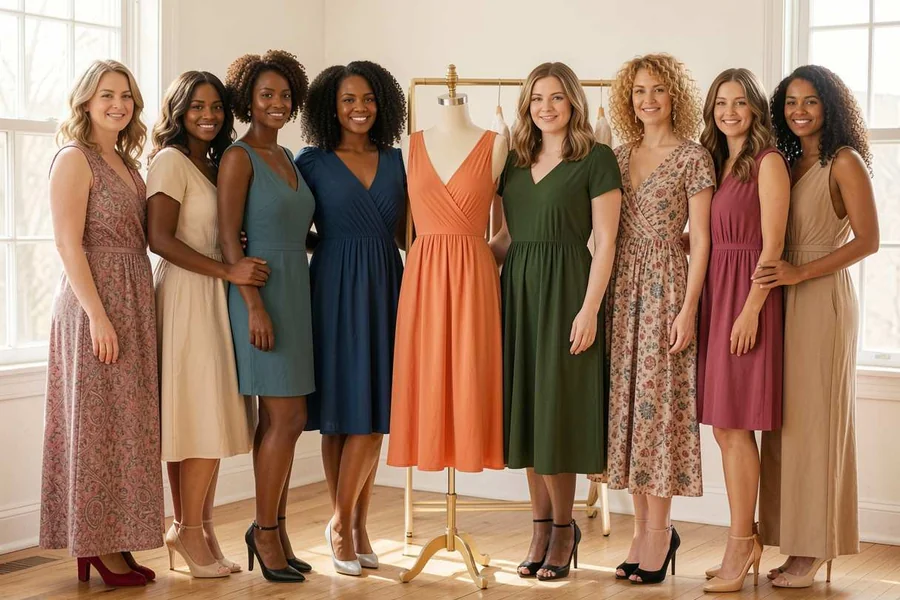
Even two people in a same size of clothing may have different body proportions.
Someone can have long legs and short torso vs. someone with long legs and short torso.
Knowing your proportions will enable you to know which cut of clothing will look better.
For instance, those with a long torso can try longer shirts or higher-rise pants. A shorter-legged person might discover that some pant styles that have a crop result in the legs looking shorter than they really are.
It’s not about concealing your body silhouette. Selecting the proportions of clothing that will create a balance is easy.
Try Different Clothing Cuts
People’s bodies are not the same, so there are different kinds of cuts to clothes.
Jeans come in a range of styles such as:
- Skinny
- Slim
- Straight
- Relaxed
- Wide-leg
- Bootcut
You can try out a variety of cuts and see which ones fit and feel good on you.
This is true also of a shirt, a dress, a jacket and a skirt.
Don’t buy the same cut each time – experiment with a few different styles and see how they look.
Consider the Fabric
Fabric could affect the fit of clothes.
Fabrics with elastane will offer a greater range of movement and flexibility. Fabrics like denim, wool, or some types of cotton might be able to keep their form better.
Some fabrics are designed to conform to the curves of the body, while others can be thicker and offer a more streamlined look.
When moving, always test the fabric to find out how it reacts.
Sitting, lifting up arms, leaning back and walking around for trying clothes.
A garment can be ideal when it is not in motion.
Check the Length of Your Clothing
Another key factor of good fit is length.
Tight trousers can bunch around your shoes and loose trousers can give you proportions you didn’t want.
Sleeves should also end at a suitable point on your wrist according to the style of the garment.
Traditional long-sleeved shirts tend to be long, ending around the wrist bone.
Sleeveless clothes should also be long enough to fit your torso.
Changing lengths will help you find what suits you and your proportions.
Avoid Buying Clothes That Are Too Small
For many, smaller sizes are preferable since they think that tight-fitting clothes would make them look slimmer.
But very tight-fitting clothes can sometimes have a perverse effect.
Fabric pulling, seams that are stretched, outlines of pockets and not-so-comfortable waist bands can all be attention drawers.
Rather, opt for garments that contour and do not compress your form.
The relaxed clothes typically make for a tidier and more natural look.
Do Not Automatically Choose Oversized Clothing
Oversized styles can be “style” but oversized clothes should still have purposeful sizes.
Just purchasing clothes a few sizes larger can result in too much stuff around the shoulders, sleeves, and waist.
Outfits that are oversized are generally loose with structure in key places.
Balance can also be beneficial. For instance, you could wear a large shirt with looser trousers or looser trousers with a structured shirt.
Try Clothes While Moving
Don’t look at clothes while they stand before a mirror.
Move around before making a decision.
Please sit, stand, walk, bend, reach and lift the arms.
Consider how comfortable the clothes are and if they are positioned correctly.
Garments should function properly when worn for daily activities and during normal movement.
If you always have to reach for a shirt to take off, or to pull up trousers or dress up and down, the fit is probably incorrect.
Use Tailoring When Necessary
It is not always easy to buy well-fitting clothes straight from the shop.
It can make a huge difference to make small changes.
A tailor can make a lot of room for adjustments:
- Trouser length
- Sleeve length
- Waist size
- Shirt width
- Jacket shape
It can be particularly rewarding to design good clothes that you’ll be wearing regularly.
However, before purchasing an item that will need significant changes in size and/or style, ask yourself if you might be better served in a different size or style.
Focus on Comfort and Confidence
Personal comfort is always a priority and fashion rules can guide.
If it doesn’t feel good for you to wear, then you’re not going to want to wear it frequently.
Wear clothes which will let you move freely and feel good.
Not all the most tight-fitting or well-done in shape pieces are necessarily the best-fitting. It’s attire that feels comfortable, looks balanced and fits into your lifestyle.
Common Signs That Clothes Do Not Fit Properly
There are a few warning signs that suggest the fit may not be appropriate.
Look out for any buttons coming undone, shoulders that are out of alignment, waistbands that tear into your skin, fabric that bunchy or itches, sleeves that cover your hands, or pants that drag on the floor.
Constant adjustment is another frequent symptom.
If you are often having to pull, lift, tighten or re-position your clothes throughout the day, you may require a new size or cut.
Final Thoughts
It is more beneficial to learn how to select clothes that fit your body rather than follow the latest trend in fashion. When clothes fit well, they make people feel better and more confident, and can look fashionable.
Always remember to know your measurements and to focus on key points like the shoulder, chest, waist, hips, sleeves and length of the trousers. Don’t be afraid to test different cuts as everyone’s body is different and sizes will differ.
Most of all, opt for items of clothing that will allow you to move freely and feel comfortable. Fitting clothes well makes creating beautiful everyday ensembles much simpler.